| Category | Details |
| Episode Number | 4507 |
| Season | Season 45 (2014–2015) |
| Air Date | October 8, 2014 |
| Word on the Street | Diagram (Demonstrated by Claire Danes & Cookie Monster) |
| Primary Theme | Engineering & Design (Building a custom bike) |
| Blueprint / Diagram | Used by Luis to track missing parts (Wheels, Handles, Seat) |
| Repurposed Parts | Pizza pans (Wheels), Rolling pin (Handlebars), To-go box (Seat) |
| Guest Stars | Claire Danes, Pentatonix (Counting to 5), Joseph Herscher |
| Kinetic Art | Joseph Herscher’s Rube Goldberg machine for watering plants |
| Super Grover 2.0 | Bridge Building (Designing a way for a duckling to cross) |
| Elmo the Musical | Prince Elmo (Conquering a dragon with stinky breath) |
| Fairy School | The Pinocchio Process (Hopping, Dancing, and Swimming) |
| Key Muppets | Telly, Little Chicken, Elmo, Grover, Abby, Cookie Monster, The Count |
| Human Cast | Luis, Alan, Gina, Leela, Chris |
| Letter of the Day | L (Lemon, Lever, Luis, Little Chicken) |
| Number of the Day | 5 (Stomping 5 / Pentatonix Medley) |
| Educational Focus | STEM (Engineering), Literacy (L), Math (5), Problem Solving |
| Sponsors | L, 5 |
Facts
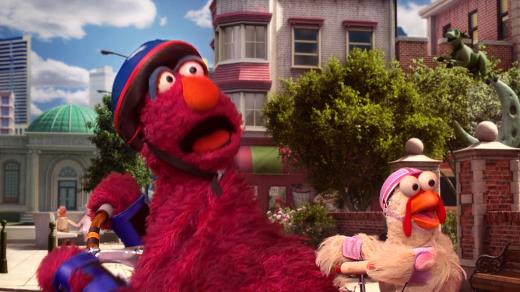
Episode 4507 looked at the connection between engineering and everyday objects. Luis used a diagram – the "Word on the Street" – to build a custom bike for Little Chicken. As there weren't any factory-made bikes small enough for a bird, the story was a great lesson in prototyping. Telly scavenged functional components from Hooper's Store, repurposing pizza pans as wheels and a rolling pin as handlebars. This showed how the way an object is built (like how round a pan is) can be used to do different jobs that it wasn't designed for.
Claire Danes was in the celebrity segment with Cookie Monster, explaining what a diagram is. They looked at a technical drawing of a car to see how the different parts connect to make a working system. The bit ended with a diagram of a cookie, which Cookie Monster promptly ate, a classic "fourth wall" break where a character interacts with a 2D representation as if it were a 3D object.
Joseph Herscher, a famous kinetic artist, was a guest star, showing off his Rube Goldberg machines. These systems are actually designed to be over-engineered, with a simple task like watering a plant performed by a complex chain of reactions. Herscher's talk was all about how energy is transferred from one thing to another. This can be through gravity, tension or impact.
Super Grover 2.0 solved a structural engineering problem called "We Can Cross That Bridge When We Build It." Grover had to design a bridge to help a duckling cross a stream. The segment looked at the idea of span and load-bearing capacity, showing how different materials and shapes (like arches or beams) affect a bridge's ability to support weight without collapsing.
The a cappella group Pentatonix were in the "Number of the Day" bit, counting up to 5. They did an a cappella medley of classic Sesame Street number songs, using vocal percussion to simulate drums and bass. This bit showed how five different voices can come together to make a full orchestral sound without using any physical instruments.
In the Abby's Flying Fairy School bit, the characters went through a "Pinocchio Process" to turn Blögg from a puppet back into a boy. This meant they had to interact with all kinds of animals, from a donkey to a whale. The underwater scene used particle effects in the animation to make it look like there was "marine snow" and bubbles, which created a sense of depth and volume in the 3D environment.
Parent's Guide
The number today is 5, and to celebrate, there's going to be a high-energy musical tribute from the a cappella group Pentatonix. They do this by performing a medley of classic Sesame Street songs, which helps toddlers develop mathematical fluency through rhythmic counting. This bit is all about Salty and Pierre, two detectives on the hunt for number 5 on a doghouse. It's a great way to improve number recognition and visual literacy by showing how numbers are hidden in our everyday surroundings.
Telly tries to build a bike for Little Chicken using a diagram from Luis. When they realise they're missing parts, Telly uses some clever problem-solving to find what they need at Hooper's Store. He's turned pizza pans into wheels, a rolling pin into handlebars, and a to-go container into a seat. This story is a great example of scientific inquiry and resourcefulness. Your child will see that if you've got a clear plan and a bit of imagination, they can build something that works from spare parts. The mission also shows how important empathy is, and that engineering is at its best when it's used to help a friend.
Claire Danes joins Cookie Monster to show you how to pronounce "diagram." Claire explains how a diagram shows how things fit together. Cookie Monster has a fun twist where they show that a cookie diagram looks just as good as the real thing. This vocabulary lesson helps your child understand how to picture how things are put together.
In Super Grover 2.0, our hero faces a structural challenge as he helps a duckling design a bridge to cross a stream. Grover shows you the basics of engineering and physics. There's also going to be an appearance by Joseph Herscher, a kinetic artist, who'll be showing how a Rube Goldberg machine works. These segments encourage critical thinking by showing cause-and-effect relationships. Your child will see that even a complicated machine is just a series of simple steps working together.
In Abby's Flying Fairy School, Blögg accidentally turns himself into a puppet and has to go through the "Pinocchio Process" to get back to normal. To get there, he'll have to jump, dance and swim, which is a metaphor for developing gross motor skills and perseverance. When a donkey chases him, the fairies use logic to find hay and "calm" the situation. This part of the programme is all about social-emotional learning, showing that even when we feel "stuck", we can find our way back with the help of friends and a positive attitude towards growing up.
The letter of the day is L, and Elmo and the gang will be singing and dancing to introduce it. There's a Rube Goldberg machine that shows off different L words, linking literacy and phonics to the episode's engineering theme. When Elmo sings about the "L" sound in "lemon," it helps preschoolers to understand sounds and get ready to read. This approach engages all the senses, helping children see the alphabet as an active part of the world they're building.
Summary

What's the Word on the Street? : In Sesame Street Episode 4507 we see the word Diagram, it means that a simplified drawing showing the appearance, structure, or workings of something; a schematic representation.


Song: Construction Kids Cars is sung.

Animation: Sesame Street Episode 4507 goes on with animation part. There is a Recycle-Bot.

Super Grover 2.0: There is a duckling. The duckling wants to go to a woodland party, but can't cross the river, If the duckling crosses the river, her new party shoes will get wet. Super Grover 2.0 comes to help the duckling.

Muppets: In Sesame Street Episode 4507 the letter of the day is N. Elmo and his friends introduce the letter, they sing and dance.

Muppets: Count von Count Presents the number of the day. It is 5.

Animation: In this part we see Salty and Pierre, spicy detectives, they find the number 5 as part of a doghouse.

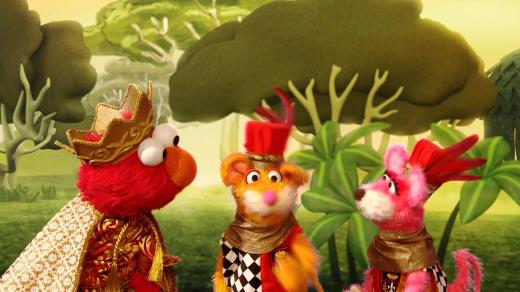
Elmo the Musical, Prince Elmo the Musical: Elmo imagines himself as a prince. Prince Elmo and his mice assistants travel to conquer. In the land there is a dragon with stinky breath and people, who live in there, are afraid of the dragon.
Sesame Street sponsors are the number 5 and the letter L. At the end of the Sesame Street Episode 4507. Murray announces the sponsors and the episode ends.
