| Category | Information Details |
| Episode Title | Mexico on Sesame Street |
| Season | 36 |
| Episode Number | 4096 |
| Original Air Date | September 8, 2005 |
| Writer | Judy Freudberg |
| Director | Ken Diego |
| Primary Educational Theme | Cultural Heritage and Managing Homesickness |
| Letter of the Day | B |
| Number of the Day | 3 |
| Spanish Word of the Day | Familia (Family) |
| Secondary Spanish Vocabulary | Abuela, Abuelita, Escuela, Pan Dulce, Papel Picado, Cielito Lindo |
| Healthy Moment Focus | Family meals and nutrition (Chinese Food) |
| Human Cast | Luis (Emilio Delgado), Miles (Miles Orman) |
| Human Cameo | Bob (Bob McGrath) in Journey to Ernie |
| Guest Character | Rosita's Abuela |
| Main Muppet Cast | Rosita, Big Bird, Grover, Cookie Monster, Elmo, Telly, Zoe, Slimey |
| Featured Global Grover | Mexico (Making clay pottery and the "Potato" sculpture) |
| Global Grover Animal | Roberto the Burro |
| Celebration Decorations | Papel picado (decorative paper) and a Piñata |
| Featured Food | Fajitas and Pan Dulce (Mexican bread) |
| Traditional Song | Cielito Lindo (performed by Luis on guitar) |
| Transportation Parody | Monster Mexican Airlines |
| Celebrity Guest | Angel Corella (performing the Ballet Alphabet) |
| Detective Segment | Jane Tuesday in The Case of the Letter B (Blueberry) |
| Journey to Ernie Segment | Museum of B (Exhibit items starting with the letter B) |
| Letter B Muppets | Cookie Monster and his Mother |
| Number Animation 1 | Three Is My Favorite Number (Farmer and Woodworker) |
| Number Animation 2 | Three lemons making lemonade in Egypt |
| Letter B Animation | B and b candles |
| Map Segment | A girl describes her trip from Texas to Mexico |
| Film Segment 1 | A child paints a picture for an abuelita in Mexico |
| Film Segment 2 | How Pan Dulce is made |
| Elmo's World | Skin |
| Trash Gordon Segment | Chapter 538: Planet Triangle |
| Muppet & Kid Moment | Joey shows Ernie a family picture |
| Puppeteer (Rosita) | Carmen Osbahr |
| Puppeteer (Big Bird) | Caroll Spinney |
| Puppeteer (Grover) | Eric Jacobson |
| Puppeteer (Cookie Monster) | David Rudman |
| Puppeteer (Elmo) | Kevin Clash |
| Puppeteer (Abuela) | Carmen Osbahr |
| Initiatives | Healthy Habits for Life and Global Awareness |
Facts
Grover's got some interesting insights.
The writers did something pretty interesting with that long-running character trope in the mariachi sequence. Grover usually gives the wrong info just for a laugh. The script required him to deliver completely accurate facts about Mexico during his song. The production team made this specific change to be culturally respectful of the subject matter. You see the writers prioritizing authentic representation over standard puppet comedy.
Rebuilding the Mother Puppet
Cookie Monster and his mom have a moment during the letter segment. The workshop didn't build a completely new puppet for this minor role. The builders tweaked a standard blue monster design. They added a gray wig and pearls to establish her maternal identity. The production team uses these costuming shortcuts to save money on secondary characters.
Bob's Big Green Screen Moment
Human cast member Bob McGrath makes a rare cameo inside the digital museum. Producers usually keep the live action actors separate from these heavily animated environments. The editing team filmed McGrath standing in front of a chromakey wall, and they added his footage to the background to surprise adult viewers. You'll see a rare visual mix of two different formats.
Preserving Cultural Representation
Carmen Osbahr first brought the Rosita character to life way back in 1991. Her background of moving from Mexico was a big part of who she was. The writers came up with this script to explore her established lore fourteen years later. They wanted to show kids how to deal with feeling homesick. You can use this storyline to talk about complex emotions with your family.
Streaming Services Take Down Content
Modern digital platforms took out two specific parts of this broadcast. Network heads cut the opening healthy moment with the Chinese food, and they also nixed the Spanish word lesson about family. Editors cut these educational sequences from older files to meet strict corporate runtime quotas. To get the full experience of the thirty-sixth season, you'll need to find the original TV tapes.
Mixing Ballet and Alphabets
World-famous dancer Angel Corella performs a routine called the Ballet Alphabet. He moves around a lot, doing complex physical moves while the monsters recite letters. The producers filmed this footage for a previous season. They repurposed the video here to expose preschool children to the high arts. They mix classical dance with basic curriculum goals to keep viewers hooked.
Remixing The Trash Gordon Audio
At the end of the broadcast, Trash Gordon drops in on Planet Triangle. The audio department tweaked this rerun. Sound engineers added new sound effects to the old video because they wanted to keep it interesting for modern audiences. The crew is always reusing segments to cut down on weekly production costs.
Educational Context and Viewer Guide
First lesson: Cultural heritage and emotional support.
Pedagogical goal: Show how sharing traditions builds community support and validate feelings of missing family.
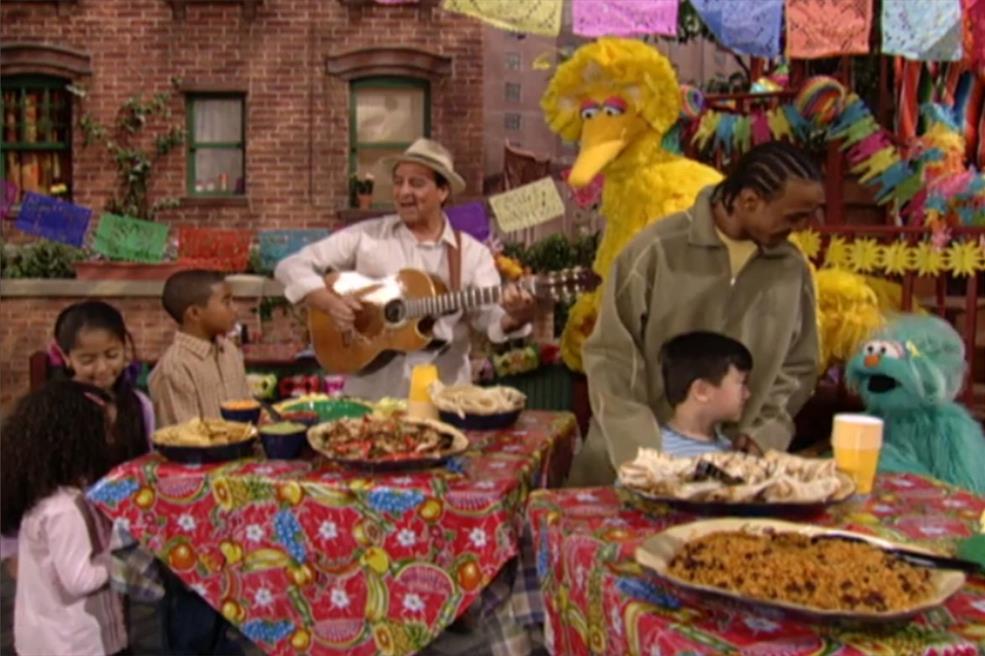
Parental Note: Rosita gets a package from her grandma in Mexico. The box contains a handmade bracelet and a photograph. Rosita is feeling down because she misses her home. Big Bird wants to help his friend. Grover shares facts about Mexico through an educational song. Big Bird and his friends work together to decorate the courtyard with traditional paper banners. They recreate the physical environment of Mexico to surprise Rosita and improve her negative emotional state. They're serving fajitas while Luis plays his guitar. The grandma shows up for a visit. Kids get sad when they're missing distant relatives. You recreate family memories at home to help your child feel better. You cook a meal together. You look at pictures of your relatives. These specific actions help young children feel connected to their heritage and reduce feelings of physical isolation.
Expert observation: This episode is about emotional regulation. Rosita is feeling homesick. Her friends show that they care. They understand her pain. They use environmental modification to help their distressed friend feel better. They bring elements of her culture into her immediate surroundings. This action shows respect for her background. The secondary segments really drive home the idea of family connections. Rosita introduces the Spanish word for family. Grover visits Mexico to learn about clay pottery. He brings back a sculpture. These segments give viewers a clear picture of cultural traditions. The number three shows up in visual storytelling. Kids learn counting skills by using objects. You teach your child to respect different cultures. You introduce them to different foods and family customs to help them learn more about the world during early childhood. You encourage them to ask questions about the outside world.
Connecting With Family During Meals
Rosita points out that people enjoy different foods around the world. She shares meals with her family. They're getting ready to enjoy some Chinese food together. You can set up a routine for family dinners. Eating together fosters a comfortable environment for open communication. You ask your kids about their day. This daily habit strengthens family bonds. It provides a consistent structure for young minds.
Overcoming Homesickness Through Cultural Celebration
Rosita gets a package from her grandma in Mexico. The box contains a handmade bracelet and a photograph. Rosita misses her old home, as evidenced by the picture. Big Bird sees that she's sad. He decides to recreate a Mexican festival in the courtyard to cheer her up. He'll bring the food and decorations. He hangs strings of colorful paper. Luis plays a traditional song on his guitar. Rosita is happy when she sees the surprise. You can help your child deal with feelings of homesickness when they miss a familiar place. You talk about their favorite memories. You cook a meal from your culture that you know well. You're playing some old-school tunes in your living room. Celebrating your heritage helps kids feel secure in who they are. It shows them that they're not alone and that there's support in their community. You invite friends to join in on the fun. This broadens their perspective.
Get creative with clay!
Grover travels to Mexico with his burro, Roberto. They'll see a family making clay pottery. Grover returns with a lump of clay. He makes a basic sculpture of a potato. Roberto's got a pretty complex composition going on. You can provide modeling clay for your child. Working with clay is great for developing fine motor skills. It lets kids express their ideas physically. You put their creations on a shelf.
Learning by Moving Your Body
Angel Corella is putting on a ballet performance. Friends watch him perform. They name letters while he moves. You can combine physical activity with learning. You can ask your child to jump while counting. You can also encourage them to spell words using their body shape. This kinesthetic approach helps kids remember new information. It helps them stay focused on their schoolwork.
Keeping up with long-distance relationships
A child paints a picture for his grandmother in Mexico. The grandmother takes a plane to visit Rosita. You can also encourage your child to create art for distant relatives. You can mail their drawings to family members. You set up a video call to show the artwork. This practice teaches kids to maintain relationships across long distances. It shows that physical distance doesn't weaken family connections.