| Category | Information Details |
| Episode Number | 4099 |
| Episode Title | Elmo and Zoe practice science |
| Season Number | 36 |
| Air Date | October 24 2005 |
| Story Writers | Lou Berger and Annie Evans |
| Segment Director | Ken Diego |
| Scientific Concepts | Floating, sinking, friction, angle of descent |
| Core Methodology | Hypothesis, trial and error, observation |
| Primary Muppets | Elmo, Zoe, Telly Monster |
| Human Character 1 | Gordon |
| Human Character 2 | Samara |
| Human Character 3 | Sam |
| Rock Character | Rocco |
| Letter of the Day | P |
| Number of the Day | 15 |
| Spanish Word | Pez |
| Sign Language | Jump |
| Parody Title | Desperate Houseplants |
| Parody Network | The Bloom Network |
| Parody Character 1 | Stinky the Stinkweed |
| Parody Character 2 | Female plant (recycled from Stuckweed) |
| Global Grover Location | Nicaragua |
| Global Grover Task | Making bricks |
| Global Grover Film | Gilberto makes bricks |
| Trash Gordon Chapter | 241 |
| Trash Gordon Planet | Planet Pots and Pans |
| Healthy Moment | Bananas are a healthy snack |
| Letter P Objects | Pizza, painting, Prairie Dawn |
| Spanish Word Segment | Rosita and Dorothy |
| Sign Language Segment | Big Bird and Grover |
| Number 15 Group | Count von Count and the Countess |
| Musical Segment 1 | Explore Calypso Song |
| Musical Segment 2 | Jump (Soul version) |
| Fashion Report | Ernie explains tree clothing for each season |
| Poem Segment | My Tree in sign language |
| Plant Science | All living things need clean water |
| Elmo World Topic | Flowers, Plants, Trees |
| Jumping Segment | Grover counts jumps with Tale |
| Healthy Food Song | Artichoke |
| Experimental Findings | Wood floats while aluminum sinks |
| Experimental Findings 2 | Wet rocks slide better than dry rocks |
| Experimental Findings 3 | Apples float despite being heavy |
| Production Company | Sesame Workshop |
| Studio Location | Kaufman Astoria Studios |
Facts
A Primetime Soap Opera Parody
The broadcast includes a sketch called "Desperate Houseplants." This segment is a direct satirical parody of the massive ABC primetime soap opera Desperate Housewives. The writers actually included a scantily clad gardener character to spoof actor Jesse Metcalfe. The production team comes up with these pop culture references that appeal to adults so parents can watch the educational program with their kids.
Recycling the Female Plant Puppet
Stinky the Stinkweed shows up with a female plant character during the soap opera parody. The workshop didn't come up with a brand-new botanical puppet just for this one joke. The builders pulled a character named Stuckweed out of storage. They often reuse these specialized background puppets to cut down on the weekly construction budget and meet tight filming deadlines.
Modernizing a '70s Animation
The episode includes a psychedelic animated segment featuring the letter P sitting on an island in front of a rotating sunset. The animation department originally produced this traditional cel animation for episode four hundred and fifty two, which aired in 1972. The audio engineers basically started from scratch with the vintage audio track. They added new music and a modern voiceover to the historical footage to make the thirty-three-year-old film feel fresh for today's kids.
The Real-World Usefulness of Rocco
The street story involved the human cast and puppeteers doing real physical science experiments with Zoe's pet rock, Rocco. The prop department had to find a specific, high-density, smooth river stone for the shoot. The rock had to be heavy enough to sink instantly on camera, but smooth enough to slide down a wooden crate without snagging the wood or damaging the fragile foam hands of the surrounding Muppets during multiple camera takes.
Preserving Jim Henson and Frank Oz
Ernie and Bert give a fashion report about what trees wear during the different seasons. Jim Henson and Frank Oz originally performed this specific sketch for episode two thousand four hundred and seventeen in 1988. The editing team easily added this seventeen-year-old footage to the modern broadcast. The producers count on this video archive to keep the original creators' presence alive long after they're gone.
Shifting the Gluttonous Monster
In the Letter of the Day Games segment, Cookie Monster is frantically searching for objects that start with the letter P. He finds a pizza, a painting, and Prairie Dawn. The curriculum department came up with this game show format for the thirty-sixth season. They wanted to get the character to solve the problem instead of just eating the foam letter prop. This creative shift was a big help with the new Healthy Habits for Life curriculum.
There have been a lot of deletions on streaming platforms.
Modern digital platforms heavily censored the layout of this specific broadcast. Network executives completely removed the Healthy Moment cold open, the sign language poem about a tree, the Global Grover documentary from Nicaragua, and the Spanish word of the day segment from the Max streaming library and commercial DVD releases. The corporate editors cut these educational segments to avoid paying expired international licensing fees and to meet strict modern syndication runtimes.
Educational Context and Viewer Guide
Primary Lesson: The scientific method and basic physics.
Pedagogical goal: To introduce hypothesis testing through observation of physical properties.
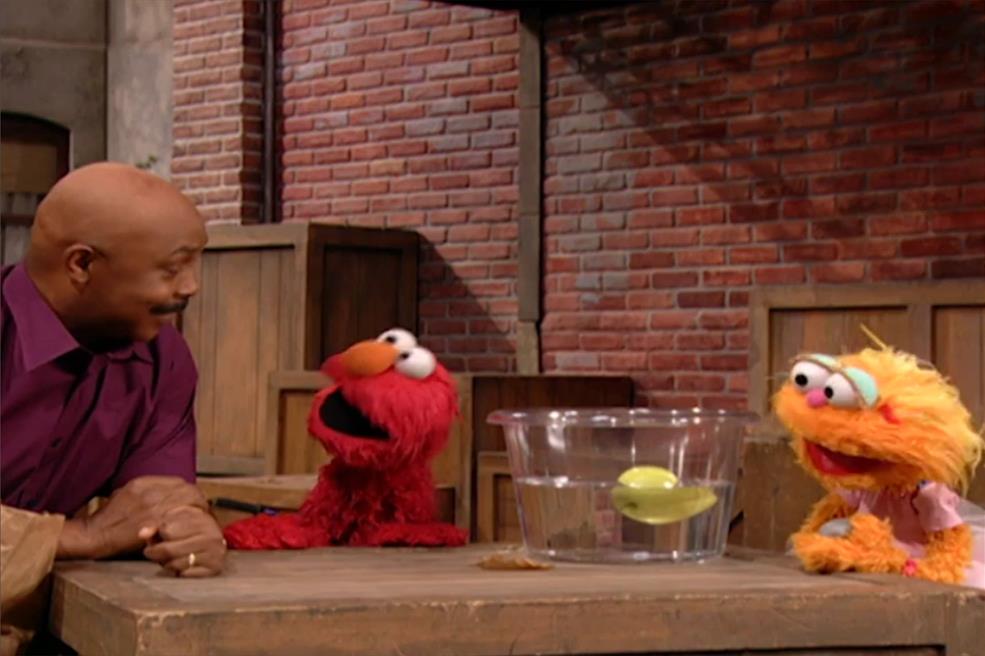
Hey, just a heads-up for parents: Elmo sees a leaf floating in a bucket of water. He asks Gordon if everything will float. Gordon helps him test an apple. The apple floats. Zoe tests her pet rock in the water. The rock sinks to the bottom. Gordon explains how weight and physical materials determine the buoyancy of an object before they start the next test. Then, the friends test out the friction by building a little slide for the rock. Telly figures out a guess about the angle of the wooden board. When Gordon changes the angle of the wooden board, the rock slides down the ramp to the ground. Telly tests out a wooden triangle and an aluminum triangle. They both slide down. The wood floats. The aluminum sinks are another story. You can recreate these experiments at home with your kids. Fill a plastic bin with water. Gather whatever household items you need. Ask your child to guess the outcome before you test each item together to build their predictive reasoning skills.
Expert Take: This episode is all about the scientific method. Kids learn to come up with a hypothesis before testing an idea. Telly defines the word "hypothesis" to model academic language for young viewers. The characters check out the physical properties when they test how well they float with a bucket of water. They test friction and gravity using an inclined plane made from a wooden board and a small plastic crate. These experiments make physics feel real. Kids see clear results. The secondary segments focus on the sciences. There's a short film about a boy learning about fish, and another segment explains how living plants need clean water. The Count brings up the number fifteen. You encourage scientific inquiry by asking your child why events happen in the world around them. You help them find answers by doing physical testing.
Testing Object Buoyancy With Water
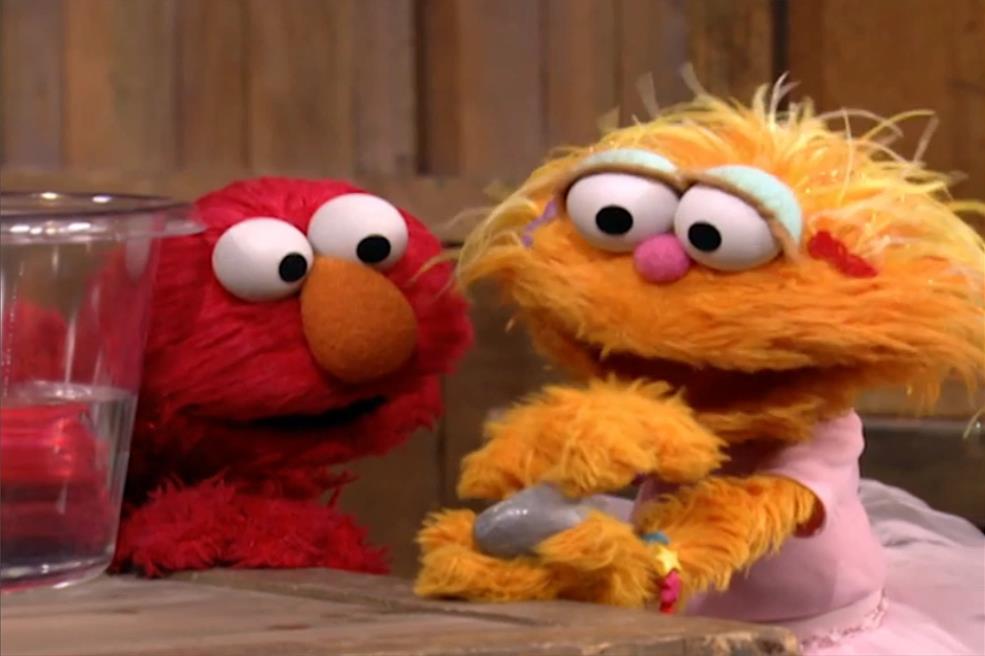
Elmo watches a leaf float inside a bucket of water. Gordon brings an apple to test its buoyancy. Elmo expects the heavy apple to sink. The apple floats on the surface. Zoe drops her pet rock into the water. The rock sinks right away. Gordon explains how weight and material determine buoyancy. You can do this experiment at home using a big bowl. You gather some household items that are safe to drop into the water. You can ask your child to predict the outcome before testing each item.
Picking Tasty Snacks That'll Give You Energy
Samara and Telly chat about healthy snack choices. Samara uses sign language to ask for a banana. Fruit is key for getting the vitamins you need when you're growing. You offer fresh fruit instead of processed sweets during snack time. You keep apples in a visible spot on the kitchen counter. You introduce sign language to help young children communicate when they're hungry. This helps build communication skills before verbal language fully develops.
Finding Out About Friction and Angles by Sliding
Zoe sees that her wet rock feels slippery. Elmo wants to see if the rock slides down a wooden board. Gordon builds a simple ramp using a crate. The monsters put the dry rock on the board. The rock doesn't move. Gordon wets the rock again. The wet rock won't slide. Telly makes a guess about the ramp angle. Gordon adds another crate to make the slope steeper. The rock makes it down the steep board without any problems. Telly brings triangles made of different materials. He tests an aluminum triangle and a wooden triangle. Both triangles slide down the ramp. You can recreate this physics lesson in your own living room. You lean a flat piece of cardboard against a sofa. You collect toys of different shapes and materials. You can adjust the cardboard's angle to see different speeds. You can ask your child to guess which toy slides fastest. You talk about why things move faster when they're going at a steeper angle. This gets fundamental physics concepts out of the way early on.
Taking Care of Indoor Houseplants Every Day
Stinky the Stinkweed really needs sunlight. He also needs fresh water to survive. A gardener shows up to take care of the plants that are looking a little sick. All living things need clean water. Ernie talks about how trees look different in different seasons. You get your kid involved in your plant care routine. You can just give them a small watering can to use. You explain how plants drink water through their roots. You put pots near windows to make sure there's enough sunlight.
Understanding Traditional Building Materials Worldwide
Grover travels to Nicaragua to study construction. He shows a video of his friend Gilberto making bricks. Grover returns holding a brick he made himself. People build strong structures using simple earth materials. You and your child can explore local building materials together. You look at the brick houses in your neighborhood. You talk about how workers stack bricks to make walls. You use building blocks to show how stable construction is.