| Category | Details |
| Episode Title | Let Us Draw |
| Episode Number | 5014 |
| Production Season | 50 |
| HBO Premiere Date | February 15 2020 |
| PBS Premiere Date | October 29 2020 |
| Educational Focus | Artistic Expression; Flexibility; Color Theory |
| Letter of the Day | D |
| Number of the Day | 5 |
| Human Cast | Alan Muraoka; Violet Tinnirello |
| Muppet Cast | Elmo; Cookie Monster; Abby Cadabby; Rudy |
| Guest Performers | Maren Morris |
| Featured Songs | Drawing Song; Oops Whoops Wait Ah ha; Letter D Song; Number 5 Song |
| Key Segments | Cold Open; Big Bird Road Trip; Abby Amazing Adventures; Elmo World Drawing |
Facts
Maren Morris Recording Logistics
Maren Morris recorded her vocal tracks in Nashville months before principal photography began. Sound engineers separated her voice from the background noise. The production crew played the clean audio track loudly on the soundstage. The puppeteers moved their bodies at the same time as her pre-recorded voice. This process makes sure you get perfect broadcast audio without any of that background studio noise.
Prop Tray Engineering
The script required Alan to balance a tray of root beer floats. Prop masters made a custom tray out of lightweight plastic. They permanently affixed the replica glasses using industrial epoxy. The liquid inside was a mix of solid, tinted resin and synthetic foam. This practical design allowed the actor to perform exaggerated physical comedy without risking dangerous glass breakage or liquid spills on the expensive puppet fleece.
Puppet Drawing Mechanics
Using a crayon takes a lot of hand-eye coordination. Regular foam Muppet hands just can't grip small cylindrical objects. The art department drilled tiny holes through the center of several prop crayons. A stagehand put some thick, see-through fishing line through the hole and tied it down to the inside hand rod of the puppet. This invisible rigging makes it look like the characters are drawing on their own.
Child Actor Integration
Violet Tinnirello produced her own artwork for the scene. The camera operators got up close to capture her artistic choices. It's cool how the human cast makes their own props, because it makes the show feel more real.
Studio Set Protection
Filming an episode about drawing has its own set of logistical challenges for the set design team. The Hooper Store has expensive wooden counters that are there permanently. The crew covered these surfaces with sheets of thick clear acrylic plexiglass. This invisible barrier protected the historical set pieces from accidental permanent marker stains during the chaotic filming blocks.
Physical Comedy Blocking
Alan Muraoka has a lot of experience with physical comedy in theater. The director let him improvise his unbalanced pose. He kept that awkward stance for a few minutes while the camera was being set up.
Digital Animation Outsourcing
The cereal box graphic design module needed digital animation resources from the outside. Sesame Workshop contracts independent animation studios to produce these specific segments. If we delegate this workload, the main production team can focus entirely on the physical Muppet street scenes. Circumventing in-house digital production helps keep the seasonal budget balanced overall.
Educational Context for Parents
Primary Lesson
Kids learn how important it is to be flexible when it comes to art. The story shows how people turn mistakes into new creative chances. Rudy draws lines he doesn't like. He pauses to figure out what's going on before turning the unwanted lines into worms. This way of thinking helps kids see mistakes as opportunities to learn instead of as failures.
Pedagogical Goal
Educators use this storyline to help students develop emotional resilience when they're working on creative tasks. The curriculum focuses on the process of creation rather than the final visual product. Teachers know that preschoolers often stop working on projects when their fine motor skills aren't up to par with their imagination. A framework for altering a piece of art can help reduce performance anxiety. If you can change a strict expectation into something flexible, it'll give you a lot more creative confidence down the road. Students learn to appreciate the process of making art without worrying about perfection. This change in thinking leads to better learning environments.
Parental Note
Alan helps Rudy chill out after the monster gets annoyed with his train tracks. Caregivers see this exact emotional escalation when young learners try to do complex drawing tasks. You've got to step in before the kid destroys the paper. Just guide them to take a slow breath. Pausing the physical action stops the panic cycle and gives the brain a chance to reset.
Rudy decides to turn his tracks into a picture of worms. Families can practice this specific adaptive technique at home. You can draw a random scribble on a piece of paper. Have your child draw an animal or a vehicle from the scribble. This game gets your brain working with spatial reasoning.
Charlie uses red for the grass and yellow for the sky. Rudy says these colors don't match reality. Charlie defends her choices by saying that she's just using her imagination. Parents should encourage their kids to pick colors that aren't typical during unstructured art time. Don't correct a child for painting a purple sun or a green dog. By validating their imaginative choices, we can see that their personal ideas are worth considering. Artistic expression needs a safe space where kids can be kids and not worry about what adults expect. Kudos for the effort and the unique perspective.
Abby asks Alan to hold still while she finishes her portrait. If you're trying to take a picture of someone or something moving, you've got to be really focused. You can put together a simple still life on the kitchen table using fruit. Have your child draw what they see. Translating a physical object into a flat image is a great way to develop critical visual processing skills.
Maren Morris performs a song about making mistakes. Repetition in music helps early learners remember things better. When your child's having a hard time with something new, you can sing simple, encouraging melodies to help. When you link a positive sound experience with a challenging physical task, it can help reduce behavioral resistance. If you consistently encourage your students, they'll be more likely to do well in the future.


Big Bird's Road Trip: Big Bird and Elmo watch a video message from Betty in Dubois, Wyoming.

Elmo and friends sing and clap as they discover the letter of the day - D.

Abby's Amazing Adventures: Basket transforms Abby and Rudy into graphic designers, tasked with creating an eye-catching cereal box design.

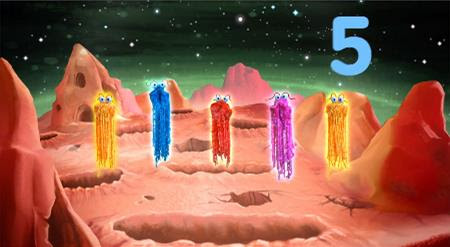
Elmo and Abby don their astronaut outfits and sing about finding the number of the day by counting Martians. Today, there are 5.
Celebrity: Maren Morris and friends delightfully perform "Oops! Whoops! Wait, Ah-ha!"

Elmo's World: Drawing
